
Lesson 4
Sumer: Cities & Inventions
This week, learners find out what it took to turn a small farming village into some of the very first cities ever built. They explore Sumer, a civilization of independent city-states built between the Tigris and Euphrates Rivers, and learn how irrigation let Sumerians farm reliably in a dry climate. Students discover cuneiform, one of the earliest writing systems, and ziggurats, the towering temples at the center of Sumerian cities, and consider why many historians think of Sumer as one of the first true civilizations.
KEY IDEAS
- Sumer developed up between the Tigris and Euphrates Rivers, made up of separate city-states.
- Irrigation let Sumerians farm reliably even in a dry climate.
- Cuneiform was one of the earliest writing systems in the world.
- Ziggurats were central, important buildings in Sumerian cities.
- Many historians consider Sumer one of the first true civilizations.
SUGGESTED PICTURE BOOK
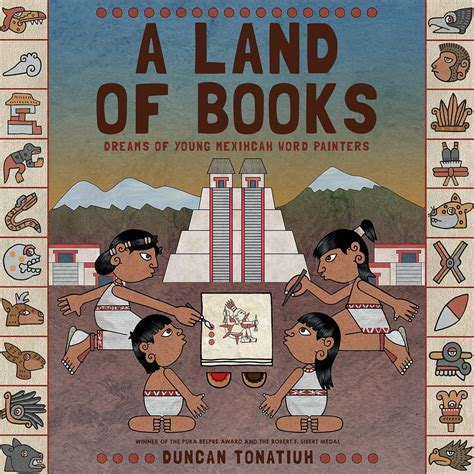
A Land of Books: Dreams of Young Mexihcah Word Painters by Duncan Tonatiuh
HANDS-ON PROJECT
Cuneiform writing activity, pressing symbols into clay or play-doh with a stylus.
VOCABULARY
- Civilization – a large, organized society with cities and shared government
- City-state – an independent city that governs itself
- Cuneiform – one of the earliest writing systems, made of wedge-shaped marks pressed into clay
- Ziggurat – a large stepped temple structure built in ancient Sumerian cities
- Irrigation – bringing water to fields using canals or ditches
DISCUSSION QUESTIONS
- What do you think makes a group of people a "civilization" instead of just a village?
- Why might writing have been such an important invention?
- What would you want a ziggurat in your own town to be used for?
- If you invented your own kind of writing, what would the very first symbol you create stand for?
- Why do you think it was important for cities to have shared rules?